Chimamanda Ngozi Adichie: The Danger of a Single Story
“When we hear only a single story about another person or country, we risk a profound misunderstanding.” — Chimamanda Ngozi Adichie
AYDF
6/4/20261 min read
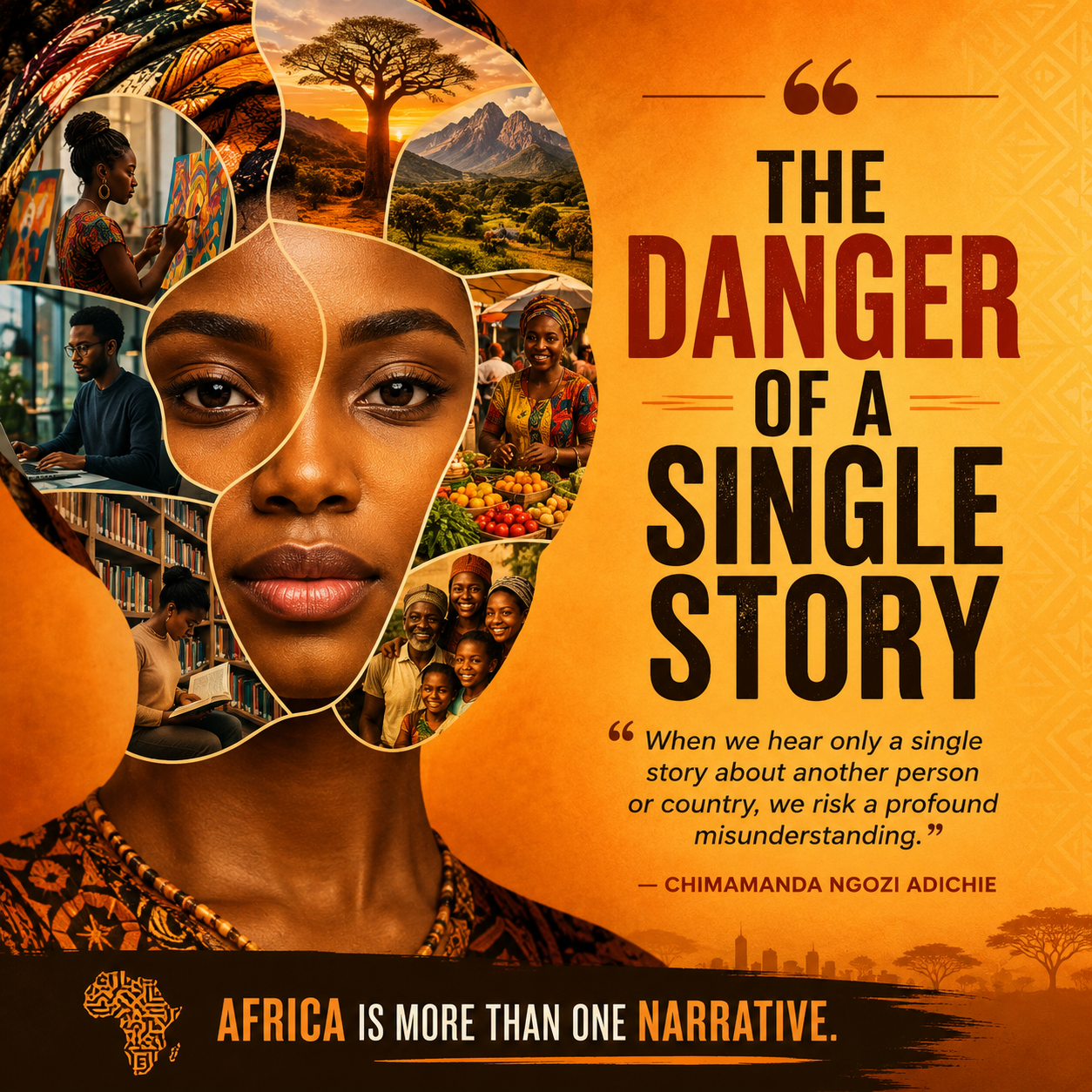
In a world where information travels faster than ever, we are often tempted to define people, cultures, or entire nations through a single image, experience, or narrative. This is exactly what Chimamanda Ngozi Adichie refers to as “The Danger of a Single Story.”
Born in Nigeria, Chimamanda Ngozi Adichie is one of the most influential African writers of her generation. Through her novels, essays, and speeches, she champions a powerful idea: every people and every culture has multiple stories that deserve to be told.
For many years, Africa was often portrayed through a limited set of narratives: poverty, conflict, famine, and instability. While these realities exist, they represent only a fraction of the continent’s story. Africa is also a place of innovation, creativity, resilience, entrepreneurship, cultural richness, and remarkable achievements.
According to Adichie, when a single story dominates, it creates stereotypes. The problem with stereotypes is not that they are always untrue, but that they are incomplete. They reduce the complexity of human lives and prevent us from truly understanding one another.
Her message is especially relevant today. Whether on social media, in the news, or in everyday conversations, we benefit from seeking different perspectives before forming opinions about people or places.
As Africans, we also have a responsibility to tell our own stories—stories of our communities, traditions, successes, and aspirations. Every story shared helps build a more accurate and nuanced picture of who we are.
Stories have the power to divide, but they also have the power to connect. It all depends on which stories we choose to listen to and share.
What about you? Which African story (whether from a book, a film, a historical event, or a personal experience) has had the greatest impact on you?