
How to Create a CV That Gets You Noticed Even Without Experience
AYDF
7/3/20262 min read

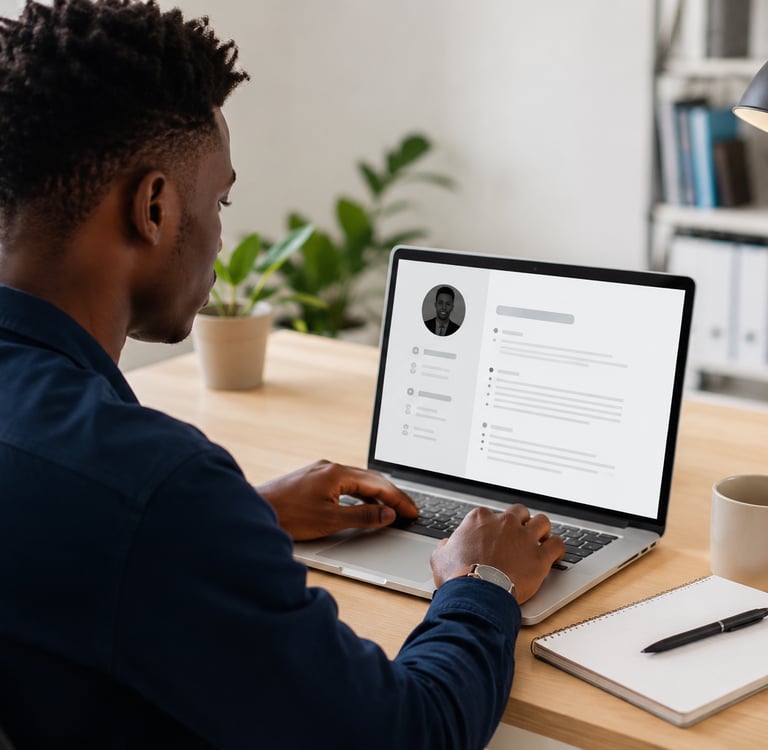
One of the biggest misconceptions among students and recent graduates is that you need years of experience to write a strong CV.
You don't.
Recruiters understand that everyone starts somewhere. What they want to see is a candidate who is organized, motivated, and able to present their potential clearly.
A great CV doesn't tell your entire life story—it makes employers want to learn more about you.
Why Your CV Matters
Your CV is often the first impression you make on an employer.
In just a few seconds, recruiters decide whether to continue reading or move to the next application.
Many companies also use Applicant Tracking Systems (ATS) to screen CVs before a human recruiter sees them. A clear, well-structured CV significantly improves your chances of passing this first step.
Step 1: Choose a Clean and Professional Layout
If you're starting your career, one page is usually enough.
Use a professional font such as Arial, Calibri, or Aptos in size 11 or 12.
Keep your layout clean with good spacing, and avoid excessive graphics, icons, or decorative elements that may confuse ATS software.
Simple is often more effective.
Step 2: Organize Your CV Properly
A strong CV should include the following sections:
Personal Information
Include:
your full name;
phone number;
professional email address;
city or country.
Avoid informal email addresses. Use something simple like firstname.lastname@email.com.
Professional Summary
In three or four lines, explain:
who you are;
the type of opportunity you are seeking;
the value you can bring to an employer.
This short introduction helps recruiters understand your profile immediately.
Skills
Highlight your most relevant skills, such as:
Microsoft Office or Google Workspace;
Canva;
Excel;
video editing;
programming;
digital marketing;
artificial intelligence tools;
languages;
communication;
teamwork.
Only include skills you genuinely possess.
Education and Certifications
List your education from the most recent to the oldest.
Include online courses and professional certifications from recognized learning platforms.
Continuous learning is highly valued by employers.
Experience
Don't worry if you've never had a formal job.
You can include:
internships;
volunteer work;
university projects;
freelance work;
entrepreneurial activities;
family business experience;
community leadership roles.
Every meaningful experience demonstrates valuable skills.
Step 3: Customize Every Application
Never send exactly the same CV to every employer.
Before applying:
read the job description carefully;
identify the required skills;
tailor your professional summary;
use relevant keywords from the job advertisement whenever they genuinely match your profile.
This improves your chances of passing ATS screening and attracting recruiters' attention.
Common Mistakes to Avoid
Avoid:
making your CV longer than one page when starting out;
using poor-quality photos (or adding one when it's not requested);
spelling and grammar mistakes;
exaggerating your skills;
choosing overly complex templates;
sending your CV without proofreading it.
Attention to detail reflects professionalism.
Free Tools to Build a Professional CV
You don't need advanced design skills to create an excellent CV.
Several free tools can help you:
Canva CV Builder;
Zety (free version);
Google Docs;
Microsoft Word templates.
The goal is not to create the fanciest CV.
The goal is to create one that is clear, professional, ATS-friendly, and easy to read.
Conclusion
Your first job opportunity doesn't depend only on your experience.
It also depends on how well you present your skills, motivation, and potential.
A well-designed CV can open the door to internships, graduate programs, scholarships, and full-time employment.
At AYDF, we encourage every young African to invest in their skills and learn how to present their journey with confidence even before landing their first job.
Which part of writing a CV do you find most challenging: your professional summary, your skills, or describing your experience?