Speaking African Languages: A Competitive Advantage for Africa's Youth
AYDF
6/30/20262 min read
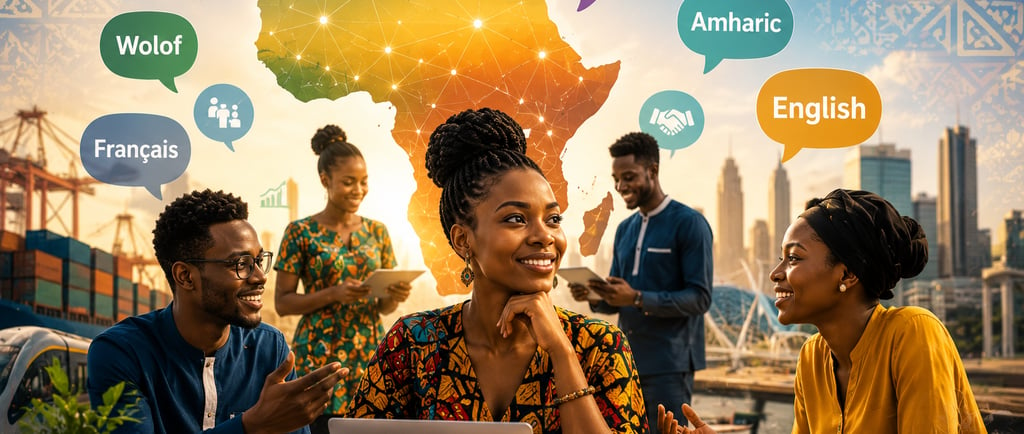
Africa is the most linguistically diverse continent in the world, with more than 2,000 languages spoken across its regions. This diversity is one of the continent's greatest cultural treasures.
Yet many young Africans still see their native language as part of their cultural identity only, without realizing that it can also become a powerful professional asset.
As the African Continental Free Trade Area (AfCFTA) strengthens economic integration across the continent, speaking multiple African languages is becoming more than a cultural skill—it is a strategic advantage.
A Continent Trading More with Itself
Africa is gradually building a single market that encourages trade, investment, and cooperation among African countries.
This transformation creates new opportunities for entrepreneurs, businesses, students, researchers, and professionals.
In this environment, communicating with people from different regions becomes a valuable skill.
A Senegalese entrepreneur who speaks Wolof and French can build stronger business relationships across West Africa.
A Kenyan professional fluent in Swahili and English can collaborate more effectively throughout East Africa.
Likewise, speaking Amharic, Hausa, Yoruba, Lingala, Arabic, or other African languages can open doors to new communities and markets.
Languages Build Trust
Business is built on relationships, and relationships are built on trust.
Speaking someone's language makes communication easier, strengthens partnerships, and demonstrates respect for local cultures.
It also helps professionals better understand customer needs, negotiate more effectively, and develop long-term collaborations.
A Powerful Asset in the Digital Economy
Digital platforms are connecting millions of Africans like never before.
Content creators, educators, entrepreneurs, and businesses that produce content in multiple African languages can reach audiences that are often underserved online.
Creating educational videos in Swahili, podcasts in Hausa, or digital courses in Wolof allows innovators to serve communities in meaningful ways.
In today's digital economy, multilingual communication is becoming a competitive advantage.
Preserving Heritage While Preparing for the Future
Learning African languages does not mean replacing English or French.
On the contrary, multilingualism is one of the strongest assets a young professional can have.
Young people who master their mother tongue, an international language, and another African language are better equipped to succeed in an increasingly connected continent.
Our languages preserve our history, strengthen our identity, and connect us to our communities.
Protecting them also means investing in Africa's future.
In a world where skills create opportunities, speaking multiple African languages is a valuable investment.
What many consider simply a cultural heritage can become a professional advantage in business, entrepreneurship, education, tourism, diplomacy, and international development.
At AYDF, we believe Africa's linguistic diversity is one of its greatest strengths.
Every language is a bridge to new ideas, new communities, and new opportunities.
How many African languages do you speak? Do you think African languages should play a greater role in education and the workplace?